

Thematic Range
The most significant drivers of long-term investment returns are structural in nature, which go beyond the purely cyclical.
Thematic investing creates an opportunity for investors to diversify beyond traditional core portfolio exposures. They create building blocks for structural growth themes, with return drivers which can differ from conventional core assets, evolving over different time horizons.
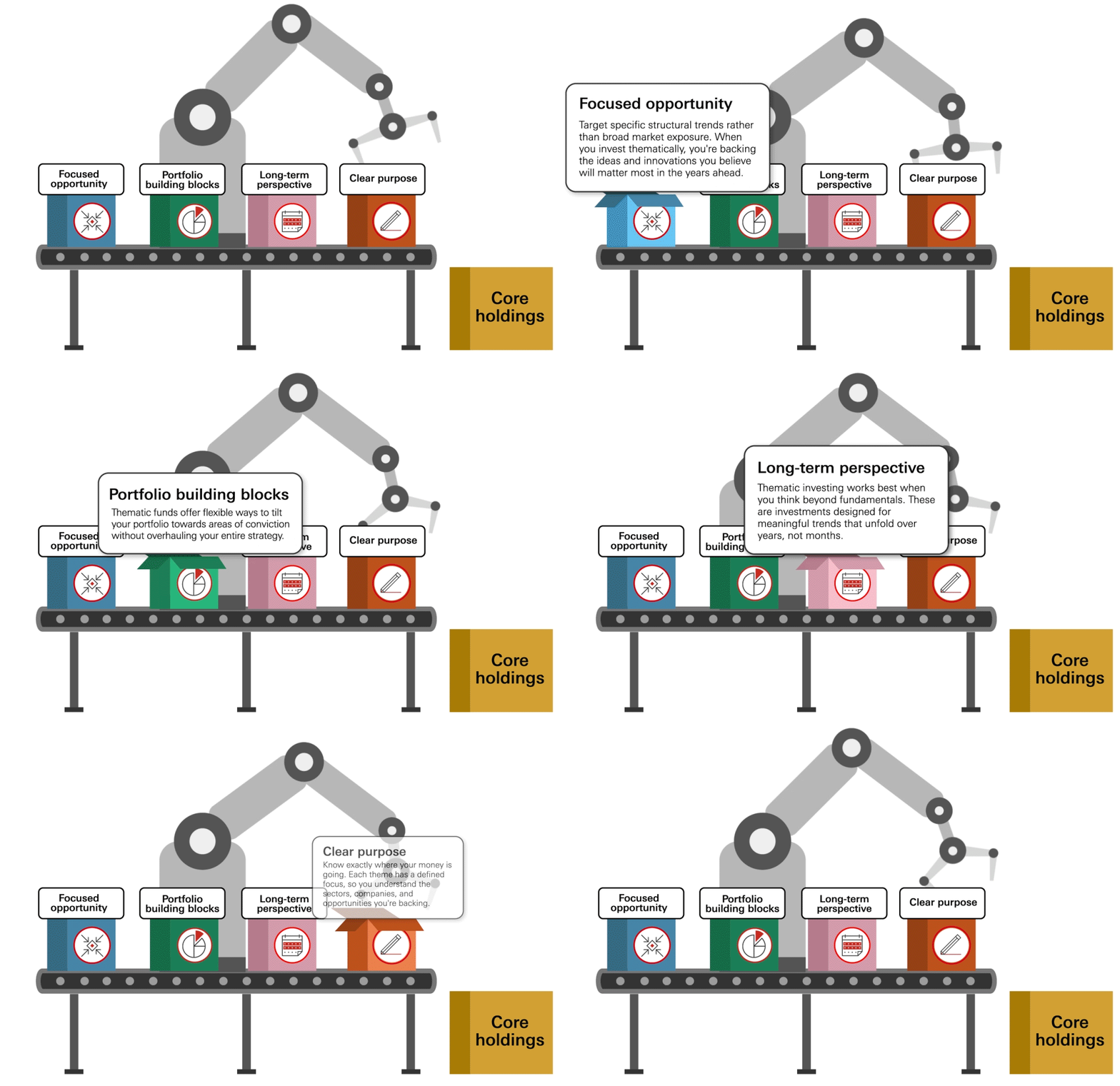
Explore our thematic opportunities
 |
|
More information |
 |
|
More information |
 |
|
More information |
 |
|
More information |
Why choose our thematic funds for your portfolio
Our Thematic ETF range has been designed to capture ideas and investment themes that are reshaping markets and portfolios worldwide – built for professional investors.
When deployed with alongside a core portfolio, our ETFs can enable institutional investors to widen the opportunity horizon, express long-term investment views, diversify returns and access exposures that might be underrepresented by traditional benchmarks.

Complement the core: Deploy themes as supplemental allocations around a diversified core portfolio

Diversify exposures: Deepen beyond traditional country, sector and market-cap benchmarks

Express long-term views: Ready portfolios for long-term themes which may be under-represented in broad indices

Widen opportunity set: Access investment ideas that might sit beyond traditional benchmarks

Targeted exposures: Add focused exposures to structural growth themes and specialised portfolio exposures
Key Risks
The value of an investment in the portfolios and any income from them can go down as well as up and as with any investment you may not receive back the amount originally invested.
- Callable Bond Risk: Any unexpected behaviour in interest rates could negatively impact the performance of callable debt securities (securities whose issuers have the right to pay off the security’s principal before the maturity date)
- Concentration Risk: The Fund may be concentrated in a limited number of securities, economic sectors and/or countries. As a result, it may be more volatile and have a greater risk of loss than more broadly diversified funds
- Counterparty Risk: The possibility that the counterparty to a transaction may be unwilling or unable to meet its obligations
- Credit Risk: A bond or money market security could lose value if the issuer’s financial health deteriorates
- Default Risk: The issuers of certain bonds could become unwilling or unable to make payments on their bonds.
- Derivatives Risk: Derivatives can behave unexpectedly. The pricing and volatility of many derivatives may diverge from strictly reflecting the pricing or volatility of their underlying reference(s), instrument or asset
- Emerging Markets Risk: Emerging markets are less established, and often more volatile, than developed markets and involve higher risks, particularly market, liquidity and currency risks
- Exchange Rate Risk: Changes in currency exchange rates could reduce or increase investment gains or investment losses, in some cases significantly
- Index Tracking Risk: To the extent that the Fund seeks to replicate index performance by holding individual securities, there is no guarantee that its composition or performance will exactly match that of the target index at any given time (“tracking error”)
- Interest Rate Risk: When interest rates rise, bond values generally fall. This risk is generally greater the longer the maturity of a bond investment and the higher its credit quality
- Investment Fund Risk: Investing in other funds involves certain risks an investor would not face if investing in markets directly. Governance of underlying assets can be the responsibility of third party managers
- Investment Leverage Risk: Investment Leverage occurs when the economic exposure is greater than the amount invested, such as when derivatives are used. A Fund that employs leverage may experience greater gains and/or losses due to the amplification effect from a movement in the price of the reference source
- Liquidity Risk: Liquidity Risk is the risk that a Fund may encounter difficulties meeting its obligations in respect of financial liabilities that are settled by delivering cash or other financial assets, thereby compromising existing or remaining investors
- Operational Risk: Operational risks may subject the Fund to errors affecting transactions, valuation, accounting, and financial reporting, among other things
- Real Estate Investments Risk: Real estate and related investments can be negatively impacted by any factor that makes an area or individual property less valuable
- Sustainability Risk: Sustainability risk means an environmental, social or governance event or condition that, if it occurs, could cause an actual or a potential material negative impact on the value of the investment