

Islamic Funds Monthly Market Overview - April
Monthly Market Overview - Equities
- Global equities fell sharply in March, ending a 10 month run of gains. The decline was driven by escalating Middle East tensions, which raised market volatility and sparked a surge in oil prices, reviving stagflation fears (slower growth and higher inflation).
- Losses were greatest in Asia and Europe, regions highly exposed to an energy supply shock. US equities also fell but were more resilient, supported by the US’s net oil exporter status, a large weighting in high-quality technology stocks, and a stronger dollar. UK large-cap companies declined too but held up better than many developed peers thanks to their more defensive profile. Emerging markets underperformed developed markets, reversing recent strength in tech-heavy markets such as South Korea and Taiwan, while weaker currencies and higher energy costs highlighted underlying fragilities more broadly.
- Within Islamic global equities Technology, Health Care and Consumer Discretionary were the major detractors during the month, while Energy contributed to performance. Region wise, North America detracted the most during the month, while Asia and EMEA also weighed on performance. Within specific stock names, Alphabet, Meta and Microsoft weighed on returns, while Exxon Mobil, Roche Holding and Chevron Corp aided performance.
- Within Islamic EM equities, South Korea and Taiwan, weighed on returns on, while Brazil and Saudi Arabi drove performance. IT detracted from a sector perspective, while Energy contributed to performance. Within specific securities, Samsung Electronics and SK Hynix weighed on returns, while Petroleo Brasileiro helped performance.
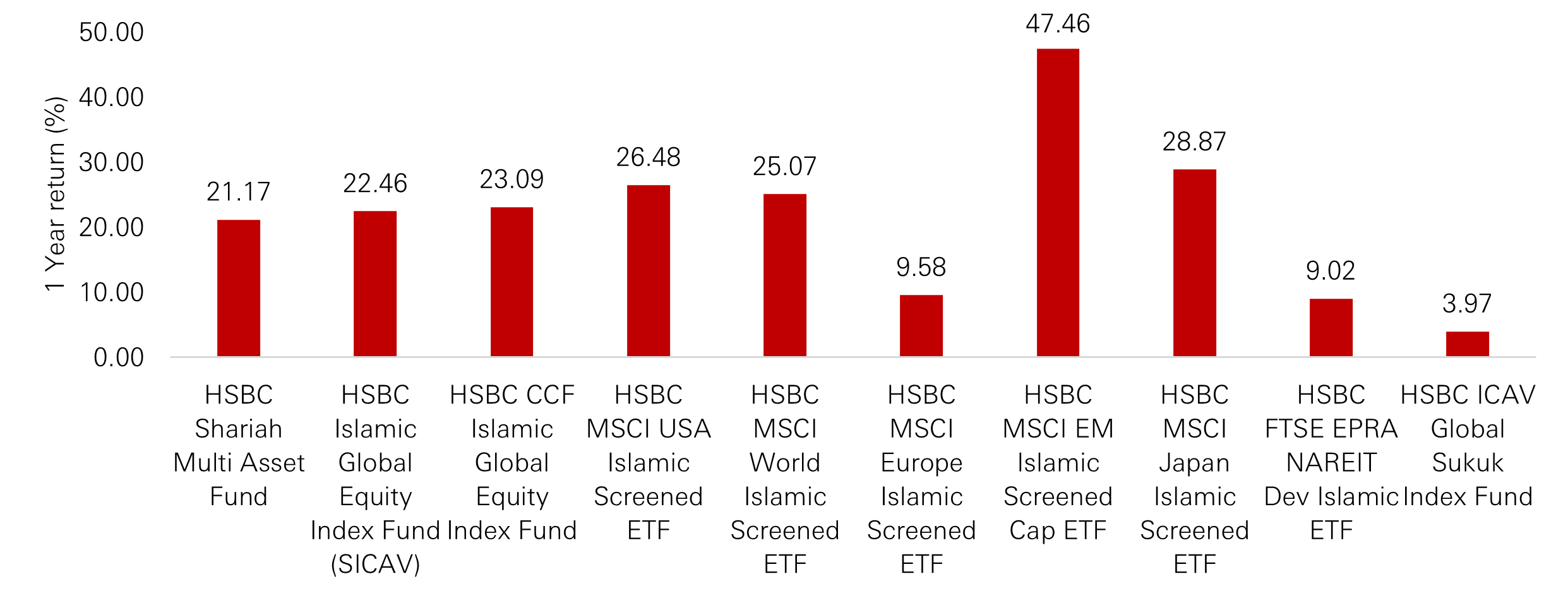
Chart 1: 1 Year Fund performance (Gross of fees)
Click the image to enlarge
Fixed Income / Sukuk
- Global government bonds also experienced a broad selloff in March (yields rose) driven by higher inflation expectations following the rise in oil prices. Markets repriced sharply, moving from anticipating interest rate cuts to the possibility of rate hikes.
- Considering sukuks exhibit a similar inverse relationship between interest rates and prices as conventional bonds. Sukuks were marginally lower, but performed in line with the broader (similar) fixed income asset class, providing diversification compared to equities.
- Sukuk differ structurally from conventional bonds in that they represent ownership in underlying assets and generate returns through profit-sharing or asset-based cash flows rather than interest. However, sukuk remain exposed to macroeconomic conditions, as their valuations depend on future cash flows and performance of these underlying assets.
- One key factor influencing sukuk investment is GDP, which is a fundamental indicator of economic health and growth. GDP affects the sukuk market in several ways. Typically, higher GDP growth is associated with robust financing demand and increased sukuk issuance. A growing economy indicates greater financial capacity, with corporates and governments looking to issue sukuk to fund future projects.
- A reduction in GDP is likely to have an adverse impact on the sukuk market. Weaker economic conditions can reduce corporate earnings and government revenues, affecting the ability of issuers to generate the cash flows associated with the underlying sukuk structures. In this respect, sukuk share some similarities with conventional debt instruments. Lower GDP growth would therefore be expected to reduce both sukuk issuance and valuations, while also making issuance conditions less favourable.
- Given the current oil shock, if central banks were to tighten monetary policy on the back of persistent inflationary pressures, this may slow economic growth. As mentioned in relation to GDP, weaker economic conditions can negatively affect the performance of the underlying assets backing sukuk. Additionally, any meaningful increase in interest rates is likely to make the overall environment less favourable for sukuks.
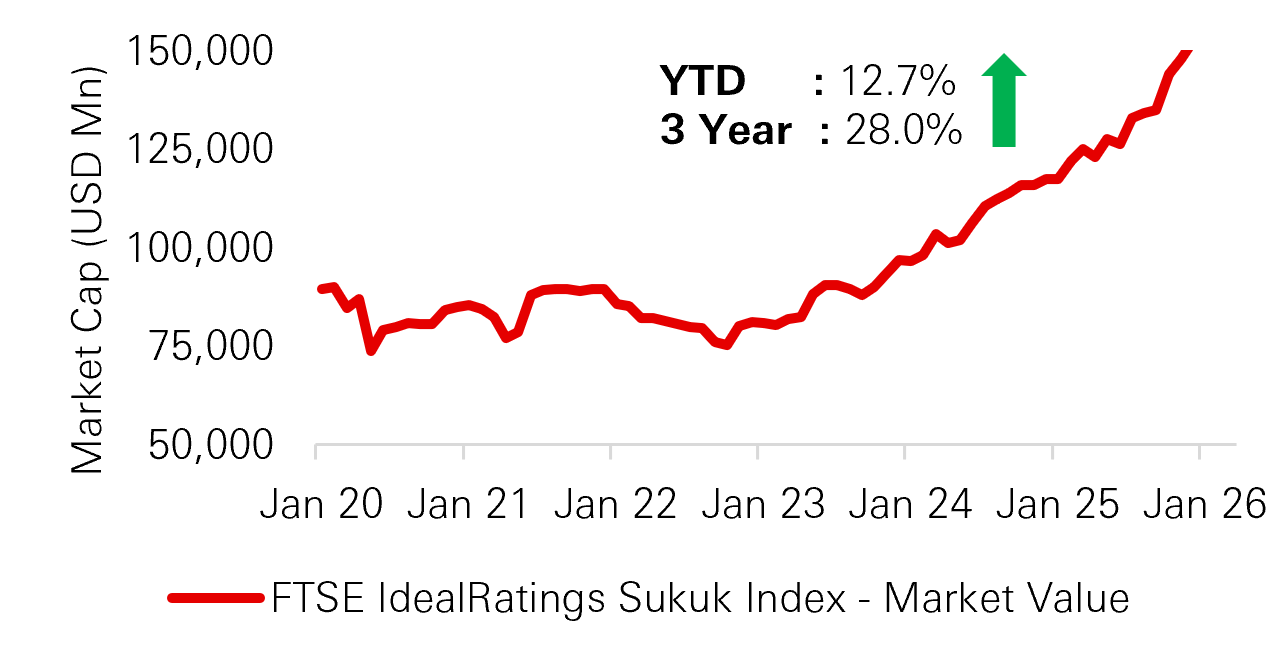
- The sukuk market has experienced strong growth in recent years, driven by increasing global demand for alternative and Shariah-compliant financing. A broader base of issuers has entered the market, contributing to a steady rise in issuance, which increased from USD199 billion in 2021 to USD291 billion in 2025—an average annual growth rate of approximately 14.5 per cent. This trend highlights the resilience and expanding role of sukuk in global financial markets, even amid varying economic conditions.
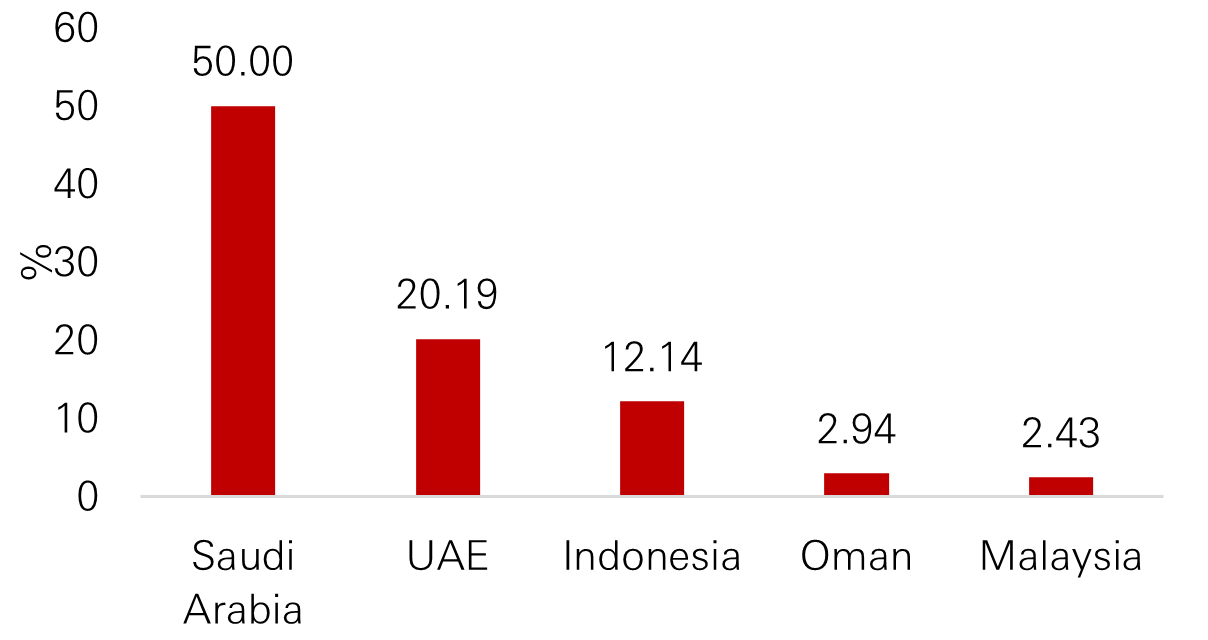
Chart 2: Country exposure (Top 5)
Click the image to enlarge
Chart 3: Market Value continues to grow
Click the image to enlarge
Commodities
- In commodity markets, oil prices rose sharply on fears of a major Middle East supply disruption after the Strait of Hormuz—through which around 20 per cent of global oil flows—closed amid escalating regional tensions. Gold initially rallied but was volatile and ended the month lower, as safe-haven flows favoured the US dollar and higher yields weighed on the gold price.
Currencies
- The US dollar strengthened against the euro and sterling over the month, underpinned by safe-haven demand as Middle East tensions escalated and risk appetite weakened. With few supportive domestic catalysts in Europe and the UK, both currencies remained under pressure.
Multi Asset Investment Team Views and Portfolio Positioning
- Outlook: Geopolitical uncertainty in the Middle East has crystallised into market volatility, with oil and other key commodity prices among the key macro variables to watch. Elevated oil prices could push inflation higher in the near term and, if it persists, raises the risk that consumers and businesses cut back on fuel use and spending—potentially leading to a sharper downturn. Our baseline scenario is that policy uncertainty and a labour market slowdown will continue to weigh on the US, resulting in more balanced, trend-like US economic growth. We assume the oil price shock fades relatively quickly, although tariffs could still add some inflation pressure in the US. We do not however anticipate a sharp slowdown, as investment in AI-related capital expenditure is providing strong support. We expect global growth to converge, with inflation falling further outside the US and gradual rate cuts in 2026.
- Portfolio Positioning: With the Middle East conflict ongoing, market volatility remains high and the outlook is still uncertain. The near-term backdrop is challenging, but mediation efforts continue, and any ceasefire or de-escalation could support a market rebound. Given the geopolitical risk and more mixed signals, we moved equities to neutral in March.
- During the month we added to gold to move overweight, taking advantage of the recent pullback from historical highs. We view the headwind in gold price as more temporary and used the weakness to add exposure at more attractive levels. We also reduced the preference for both Japanese and emerging markets equities, taking some profits after some deterioration in price momentum, but still maintain higher exposure in both regions as signals support is still strong and valuations remain more attractive relative to other parts of the market.
- We remain tilted away from US equities, but reduced the underweight size over the month, funded from the reduction in the preference for Japan and emerging markets
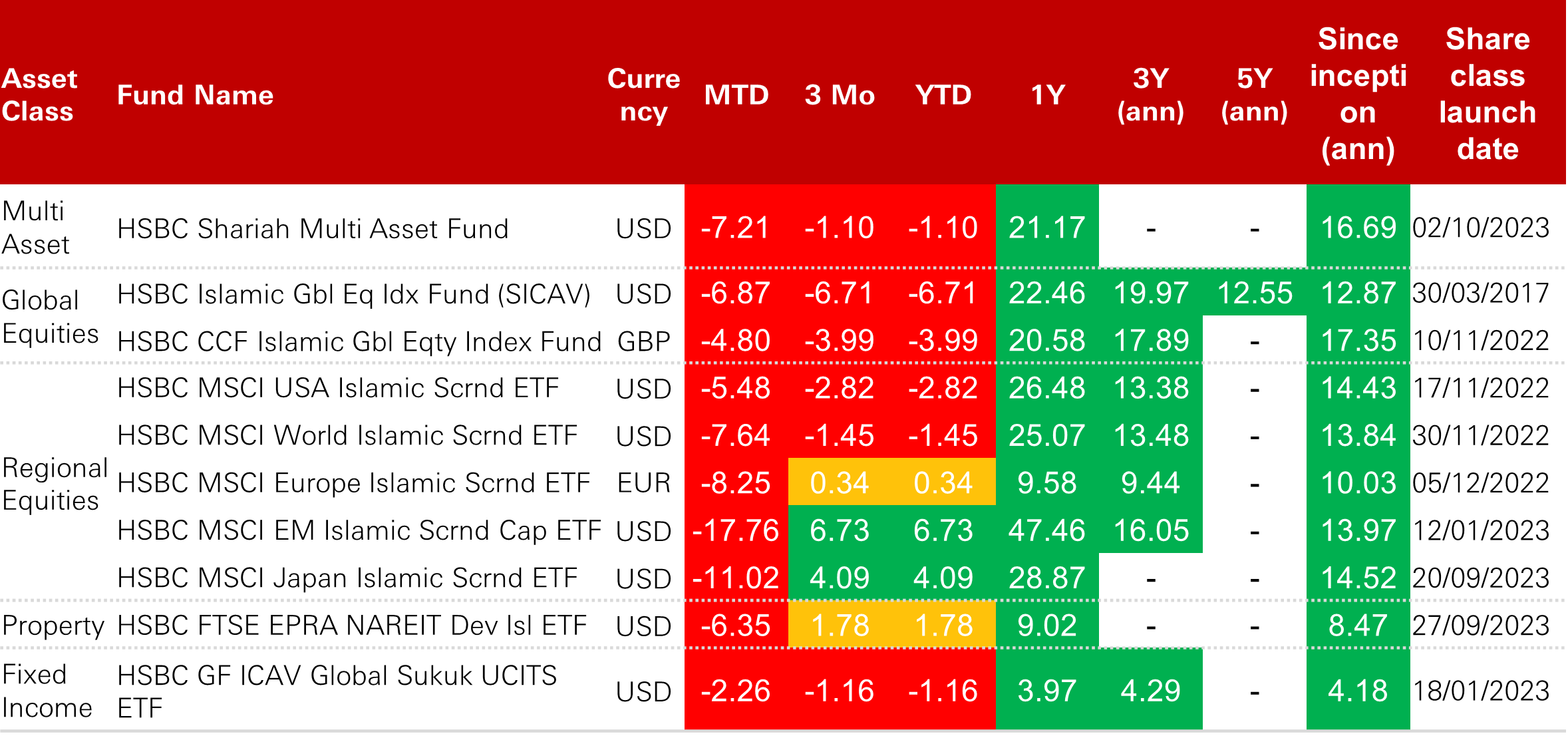
HSBC Islamic Product Suite - Returns (Gross of Fees per cent)
Click the image to enlarge
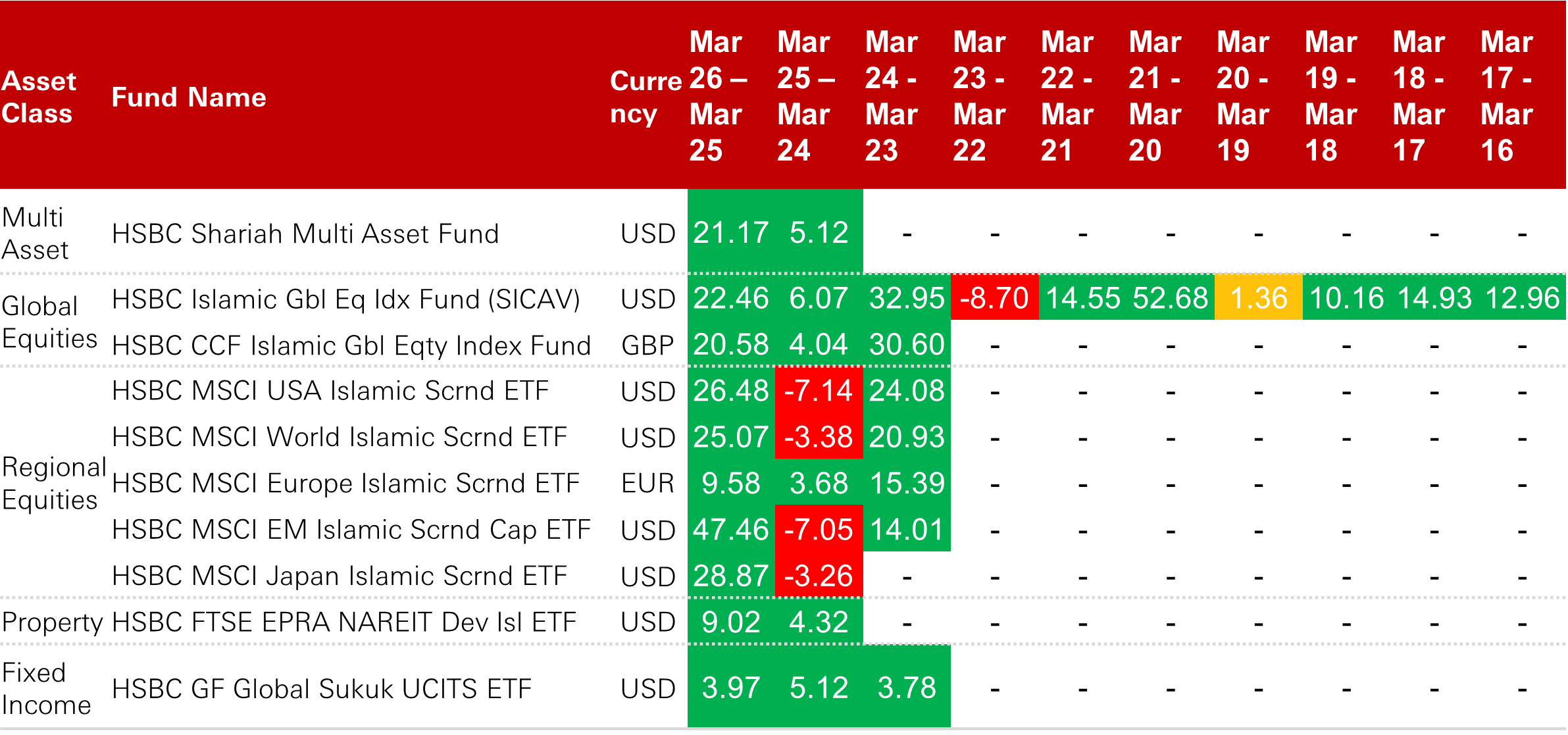
HSBC Islamic Product Suite - Rolling 1 Year Returns (Gross of fees per cent)
Click the image to enlarge
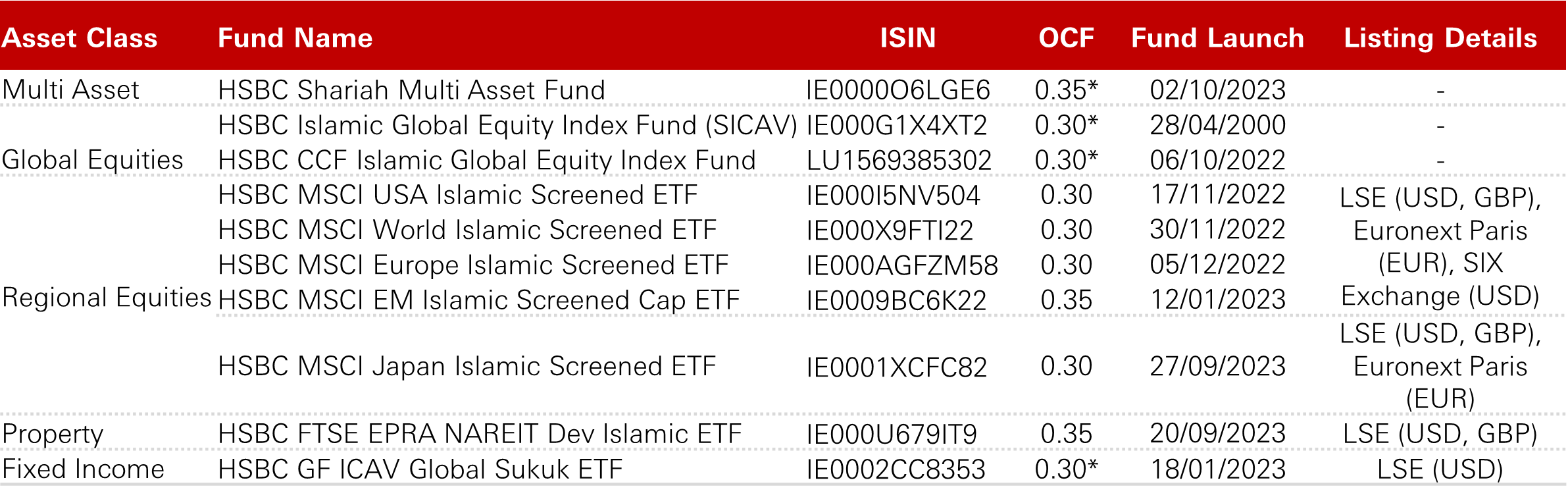
Key Information
Click the image to enlarge
* For more information including all available share classes, please contact your relationship manager.
Fund Registrations:
| HSBC MSCI World Islamic Screened UCITS ETF | FR, UK, NL, LU, CH, IE |
| HSBC MSCI Emerging Markets Islamic Screened Capped UCITS ETF | FR, UK, NL, LU, CH, IE |
| HSBC MSCI Europe Islamic Screened UCITS ETF | FR, UK, NL, LU, CH, IE |
| HSBC MSCI USA Islamic Screened UCITS ETF | FR, UK, NL, LU, CH, IE |
| HSBC FTSE EPRA Nareit Developed Islamic UCITS ETF | FR, IE, LU, NL, UK |
| HSBC MSCI Japan Islamic Screened UCITS ETF | FR, IE, LU, NL, UK/td> |
| HSBC Global Funds ICAV - Global Sukuk UCITS ETF | BM, FR, IE, NL, AE, UK, SG |
| HSBC Islamic Global Equity Index Fund | BH, QA, AE, UK, JE, LU, FR, CH, SE |
| HSBC UCITS CCF - Islamic Global Equity Index Fund | BIE, UK |
| HSBC Global Funds ICAV - Shariah Multi Asset Fund | BM, IE, CH, UK |
Past performance does not predict future returns. Past performance is shown gross of fees, meaning any potential returns will be reduced by the deduction of investment management fees and any other expenses incurred. Returns not denominated in GBP may vary with fluctuations in the exchange rate. Shariah investment restrictions may result in the funds performing less well than funds with similar objectives which are not subject to these restrictions.
Source: HSBC Asset Management as of 31 March 2026.
Key Risks
The value of an investment in the portfolios and any income from them can go down as well as up and as with any investment you may not receive back the amount originally invested.
- Counterparty Risk: The possibility that the counterparty to a transaction may be unwilling or unable to meet its obligations.
- Exchange Rate Risk: Changes in currency exchange rates could reduce or increase investment gains or investment losses, in some cases significantly.
- Index Tracking Risk: To the extent that the Fund seeks to replicate guarantee that its composition or performance will exactly match that of the target index at any given time (“tracking error”).
- Investment Leverage Risk: Investment Leverage occurs when the economic exposure is greater than the amount invested, such as when derivatives are used. A Fund that employs leverage may experience greater gains and/or losses due to the amplification effect from a movement in the price of the reference source.
- Liquidity Risk: Liquidity Risk is the risk that a Fund may encounter difficulties meeting its obligations in respect of financial liabilities that are settled by delivering cash or other financial assets, thereby compromising existing or remaining investors.
- Operational Risk: Operational risks may subject the Fund to errors affecting transactions, valuation, accounting, and financial reporting, among other things.
- Sustainability risk: Means an environmental, social or governance event or condition that, if it occurs, could cause an actual or potential material negative impact on the value of the investment.
Further information on the potential risks can be found in the Key Investor Information Document (KIID) and/or the Prospectus of the relevant Fund before making any final investment decisions
Important Information
For Professional Clients only and should not be distributed to or relied upon by Retail Clients.
The material contained herein is for marketing purposes and is for your information only. This document is not contractually binding nor are we required to provide this to you by any legislative provision. It does not constitute legal, tax or investment advice or a recommendation to any reader of this material to buy or sell investments. You must not, therefore, rely on the content of this document when making any investment decisions.
This document is not intended for distribution to or use by any person or entity in any jurisdiction or country where such distribution or use would be contrary to law or regulation.This document is not and should not be construed as an offer to sell or the solicitation of an offer to purchase or subscribe to any investment.
The contents are confidential and may not be reproduced or further distributed to any person or entity, whether in whole or in part, for any purpose. This presentation is intended for discussion only and shall not be capable of creating any contractual or other legal obligations on the part of HSBC Global Asset Management (UK) Limited or any other HSBC Group company.
The document is based on information obtained from sources believed to be reliable but which have not been independently verified. HSBC Global Asset Management (UK) Limited and HSBC Group accept no responsibility as to its accuracy or completeness. Care has been taken to ensure the accuracy of this presentation but HSBC Global Asset Management (UK) Limited accepts no responsibility for any errors or omissions contained therein.
This document and any issues or disputes arising out of or in connection with it (whether such disputes are contractual or non-contractual in nature, such as claims in tort, for breach of statute or regulation or otherwise) shall be governed by and construed in accordance with English law.
Any views expressed were held at the time of preparation and are subject to change without notice. While any forecast, projection or target where provided is indicative only and not guaranteed in any way. HSBC Global Asset Management (UK) Limited accepts no liability for any failure to meet such forecast, projection or target.
HSBC ETFs is a sub-fund of HSBC ETFs plc (“the Company”), an investment company with variable capital and segregated liability between sub-funds, incorporated in Ireland as a public limited company, and is authorised by the Central Bank of Ireland. The company is constituted as an umbrella fund, with segregated liability between sub-funds. Shares purchased on the secondary market cannot usually be sold directly back to the Company. Investors must buy and sell shares on the secondary market with the assistance of an intermediary (e.g. a stockbroker) and may incur fees for doing so. In addition, investors may pay more than the current Net Asset Value per share when buying shares and may receive less than the current Net Asset Value per Share when selling them. UK based investors in HSBC ETFs plc are advised that they may not be afforded some of the protections conveyed by the Financial Services and Markets Act (2000), (“the Act”). The Company is recognised in the United Kingdom by the Financial Conduct Authority under section 264 of the Act. The shares in HSBC ETFs plc have not been and will not be offered for sale or sold in the United States of America, its territories or possessions and all areas subject to its jurisdiction, or to United States Persons. Affiliated companies of HSBC Global Asset Management (UK) Limited may make markets in HSBC ETFs plc. All applications are made on the basis of the current HSBC ETFs plc Prospectus, relevant Key Investor Information Document (“KIID”), Supplementary Information Document (SID) and Fund supplement, and most recent annual and semi-annual reports, which can be obtained upon request free of charge from HSBC Global Asset Management (UK) Limited, 8 Canada Square, Canary Wharf, London, E14 5HQ. UK, or from a stockbroker or financial adviser. The indicative intra-day net asset value of the sub-fund[s] is available on at least one major market data vendor terminal such as Bloomberg, as well as on a wide range of websites that display stock market data, including www.reuters.com. Investors and potential investors should read and note the risk warnings in the prospectus, relevant KIID and Fund supplement (where available) and additionally, in the case of retail clients, the information contained in the supporting SID.
HSBC ISLAMIC FUNDS - HSBC ISLAMIC GLOBAL EQUITY INDEX FUND is a sub-fund of the HSBC Islamic Funds, a Luxembourg domiciled Société d'investissement à Capital Variable (SICAV). UK based investors in HSBC Islamic Funds are advised that they may not be afforded some of the protections conveyed by the provisions of the Financial Services and Markets Act 2000. HSBC Islamic Funds is recognised in the United Kingdom by the Financial Conduct Authority under section 264 of the Act. The shares in HSBC Islamic Funds have not been and will not be offered for sale or sold in the United States of America, its territories or possessions and all areas subject to its jurisdiction, or to United States Persons. All applications are made on the basis of the current HSBC Islamic Funds Prospectus, Key Investor Information Document (KIID), Supplementary Information Document (SID) and most recent annual and semi-annual reports, which can be obtained upon request free of charge from HSBC Global Asset Management (UK) Limited, 8 Canada Square, Canary Wharf, London, E14 5HQ. UK, or the local distributors. Investors and potential investors should read and note the risk warnings in the prospectus and relevant KIID and additionally, in the case of retail clients, the information contained in the supporting SID.
Shariah investment restrictions may result in the funds performing less well than funds with similar objectives which are not subject to these restrictions.
HSBC Global Funds ICAV – Shariah Multi Asset Fund are sub-funds of HSBC Global Funds ICAV, an open-ended Irish Collective Asset-Management Vehicle which is constituted as an umbrella fund with segregated liability between sub-funds and with variable capital. This information does not constitute an offer or solicitation to buy shares in the Fund. Access to the information contained on this is restricted to persons who are residents of jurisdictions in which the distribution and the offering of shares in the Fund is authorised by the laws of the particular jurisdiction. The information contained herein is not for distribution to and does not constitute an offer to sell or solicitation of any offer to buy any securities in the United States of America to or for the benefit of any United States person(s). This material is not a solicitation, an offer, a recommendation or advice to buy or sell investment products, or to engage in other transactions. It explicitly does not take account the investment objectives, knowledge, experience or financial situation of any person. You should not act upon this information in any way and you are advised to obtain professional advice which does take account of your particular circumstances. You should carefully read the Fund’s Prospectus and Key Investor Information Document (the “KIID”), as well as consult with your advisers before making a decision to buy Fund shares. Investing in the Fund involves risk, including without limitation risk of total investment loss and other risks noted in the Fund’s Prospectus and KIID.
The HSBC UCITS Common Contractual Fund is an Open-Ended Umbrella Common Contractual Fund established under the laws of Ireland pursuant to the European Communities (Undertakings for Collective Investment in Transferable Securities) Regulations 2011 (as amended). There can be no guarantee that the CCF or any of its Funds investment objectives will be achieved and investment results may vary substantially over time. Prospective Unit holders should carefully consider whether an investment in Units is suitable for them in light of their circumstances and financial resources and should carefully review the Prospectus and the relevant Supplement, including the sections entitled “Risk Factors” and “Portfolio Transaction and Conflicts of Interest”, before investing in the CCF. NATURAL PERSONS MAY NOT BE UNITHOLDERS IN THE CCF OR ANY OF ITS FUNDS. Investors and potential investors should read and note the risk warnings in the prospectus and relevant KIID.
The decision to invest in the fund should take account of all the characteristics or objectives as described in the prospectus or equivalent document. Detailed information for article 8 and 9 sustainable investment products, as categorised under the Sustainable Finance Disclosure Regulation (SFDR), including; description of the environmental or social characteristics or the sustainable investment objective; methodologies used to assess, measure and monitor the environmental or social characteristics and the impact of the selected sustainable investments and; objectives and benchmark information, can be found at: https://www.assetmanagement.hsbc.co.uk
The value of investments and any income from them can go down as well as up and investors may not get back the amount originally invested. Where overseas investments are held the rate of currency exchange may also cause the value of such investments to fluctuate. Investments in emerging markets are by their nature higher risk and potentially more volatile than those inherent in some established markets. Stock market investments should be viewed as a medium to long term investment and should be held for at least five years. Any performance information shown refers to the past and should not be seen as an indication of future returns.
To help improve our service and in the interests of security we may record and/or monitor your communication with us. HSBC Global Asset Management (UK) Limited provides information to Institutions, Professional Advisers and their clients on the investment products and services of the HSBC Group.
Approved for issue in the UK by HSBC Global Asset Management (UK) Limited, who are authorised and regulated by the Financial Conduct Authority.
HSBC Asset Management is the brand name for the asset management business of HSBC Group, which includes the investment activities provided through our local regulated entity, HSBC Global Asset Management (UK) Limited.
www.assetmanagement.hsbc.co.uk
Copyright © HSBC Global Asset Management (UK) Limited 2026. All rights reserved.
Content ID: D069471_V1.0; Expiry Date: 31.10.2026