

Listed Real Estate
Global opportunities in listed real estate equity
What’s new


Who we are
Our listed real estate strategy aims to provide long term capital growth and income by investing worldwide in shares of companies related to the real estate industry while promoting environmental, social and governance characteristics.
What sets us apart

Experienced team HSBC Asset Management has 20 years of experience in real estate investing |

Global expertise Access global real estate markets, with our team of analysts covering over 60 real estate markets across the world |

A focus on risk management We focus on large-cap, income-producing, low leverage real estate |
Why listed real estate
|
|

|
|
1. Moody’s data: Examining Infrastructure as an Asset Class, 2021; Direct Lending vs Liquid Markets - Arcmont Asset Management, 2022 |
||
A glimpse into the investments

Healthcare
Encompasses senior living facilities, hospitals, and medical offices

Data Centers
Dedicated to properties supporting internet infrastructure, cloud computing, and IT services

Residential
Includes multi-family units, single-family units, and other residential housing developments
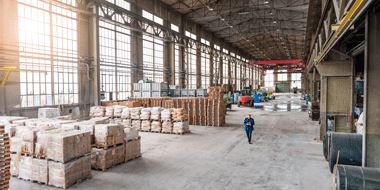
Industrial
Includes warehouses, logistics facilities, and manufacturing-related properties

Self-Storage
Facilities used for personal or business storage

Hospitality
Covers hotels, resorts, and other tourism-related properties
 We aim to drive significant impact through our expertise, uncovering resilient real estate opportunities that adapt to market shifts and foster sustainable, long-term growth."
Head of Listed Real Estate
Leadership

Nick Leming Head of Listed Real Estate |

Guy Sheppard Global Property Market Analyst |

Tom Carlton Senior Portfolio Manager |
Key Risks
Investing involves risk and the value of an investment and the income from it may fall as well as rise. You may not get back the full amount invested.
The risks in relation to infrastructure can generally be grouped into: completion, prepayment, technological, raw materials supply, economic, financial, currency, government contract, political, regulatory, privatisation and industry restructuring, environmental and force majeure risks – the latter category concerns the risk that some discrete event might impair or prevent altogether, the operation of the project for a prolonged period of time after the project has been completed and place in operations. More detailed information is contained in the Offering Memorandum.
- Completion risk has a monetary aspect and a technical aspect. The monetary element concerns the risk either that a higher-than-anticipated rate of inflation, shortage of critical supplies, unexpected delays, an underestimation of construction costs or a lower-than expected price for the project’s output might cause the project to be no longer be profitable. The technical element is where the project may prove to be technically infeasible; environmentally objectionable or require such large expenditures to become technically feasible, that the project becomes uneconomic to complete
- Prepayment risk is the risk that a loan or investments is repaid earlier than expected with the result that the term of the loan or investment is shortened; the interest paid in respect of that loan or investment is reduced and the yield is adversely affected
- Technological risk exists when the technology, on the scale proposed for the project, will not perform according to specifications or will become prematurely obsolete. The risk of technical obsolescence following completion becomes particularly important when a project involves a state-of-the-art technology in an industry whose technology is rapidly evolving
- Raw Material Supply risk is particularly in connection with natural resource projects, where there is a risk that the natural resources, raw materials, or other factors of production necessary for successful operation may become depleted or unavailable during the life of the project
- Economic risk is where demand will not be sufficient to generate revenues to cover the project’s costs and debts and provide a fair rate of return to equity investors
- Financial risk exists as rising interest rates could jeopardise the project’s ability to service its debt, if a significant portion consists of floating-rate debt
- Currency risk arises when the project’s revenue stream or its cost stream is denominated in more than one currency and a change in the exchange rate occurs
- Government Contract risk arises where authorities may not be able to or may choose not to honour their obligations, especially over the long term. If a project fails to comply with any regulation or contractual obligation, such project could be subject to monetary penalties, loss of the right to operate affected businesses, or both
- Political risk involves the possibility that political authorities might interfere with the timely development and/or long-term economic viability of the project
- Regulatory risk includes failure to obtain or a delay in obtaining permits/approvals which could result in fines; additional costs; or lost revenues
- Privatisation and Industry Restructuring risk is present as governments or government-controlled entities may, either directly or through regulatory agencies, control many assets in the jurisdiction of a project. This control may also extend to the distribution, sale or use of certain infrastructure commodities
- Environmental risk is present when the environmental effects of a project might cause a delay in the project’s development or necessitate a costly redesign
Further information on the potential risks can be found in the Key Investor Information Document (KID) and/or the Prospectus or Offering Memorandum.
Important information
Contact us
If you are considering investing in alternatives, or want to learn more about our investment strategies, please get in touch.